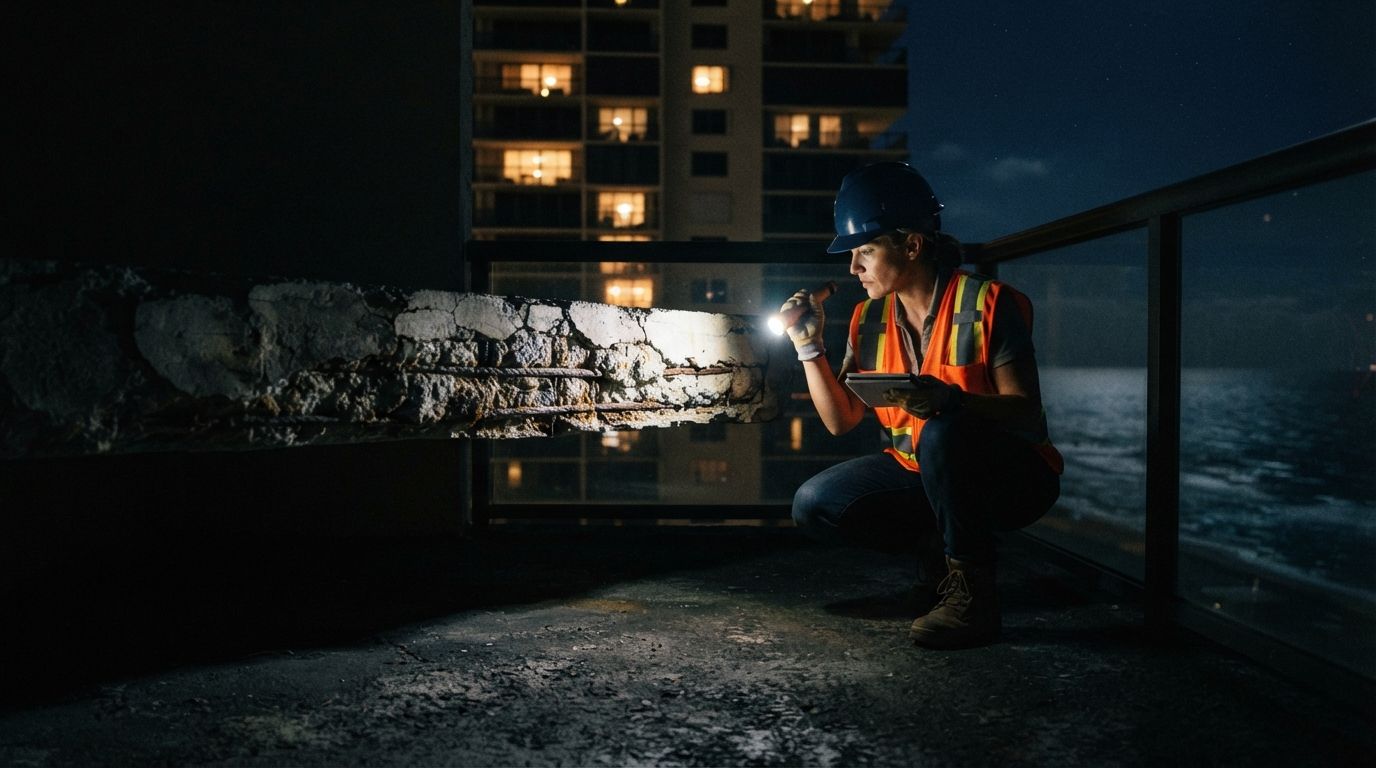
A Florida milestone inspection has two possible phases, and most of the questions a condo board asks come down to which phase applies and what happens next. This guide answers them from the text of section 553.899 of the Florida Statutes, in plain language, so a board knows what to expect before it hires anyone.
What happens in phase one of a milestone inspection?
Phase one is a visual examination of the building, both habitable and nonhabitable areas, carried out by a licensed architect or engineer. The inspector gives a qualitative assessment of the structural condition of the building. Phase one is the step every building in scope goes through: under section 553.899, that means condominium and cooperative buildings three or more habitable stories in height, by December 31 of the year the building reaches 30 years of age and every 10 years after that. If phase one finds no signs of substantial structural deterioration, phase two is not required, and the board receives the phase one report.
When is phase two required?
Phase two is required only when phase one finds substantial structural deterioration. It is a more detailed examination, and it may involve destructive or nondestructive testing at the inspector's direction. For a board, that is the moment the inspection stops being a routine check and starts shaping a project: the phase two findings are what define the repairs. Boards usually want to understand early how phase two would be scoped and how residents would be affected, which is why the firm that explains this clearly before phase one tends to be trusted with what comes after.
What happens after a phase two report?
Under section 553.899, local governments must require owners to schedule or commence repairs after the phase two report, and repairs must be commenced within 365 days of receiving it. If the owner cannot show that repairs are scheduled or under way, the local enforcement agency must determine whether the building is unsafe for human occupancy. The local building department applies these rules for each building, so a board should confirm the exact process with its city or county and with the association's attorney. This guide is a plain-language summary for boards, not legal advice.
Frequently asked questions
Who can perform a milestone inspection?
A licensed architect or engineer, according to section 553.899 of the Florida Statutes.
Does every condo building need one?
Condominium and cooperative buildings three or more habitable stories in height do, by December 31 of the year the building reaches 30 years of age and every 10 years after that. The local enforcement agency can set a 25-year threshold based on local conditions, such as proximity to salt water.
Where can we read the law itself?
The full text of section 553.899 is published by the Florida Senate at flsenate.gov.