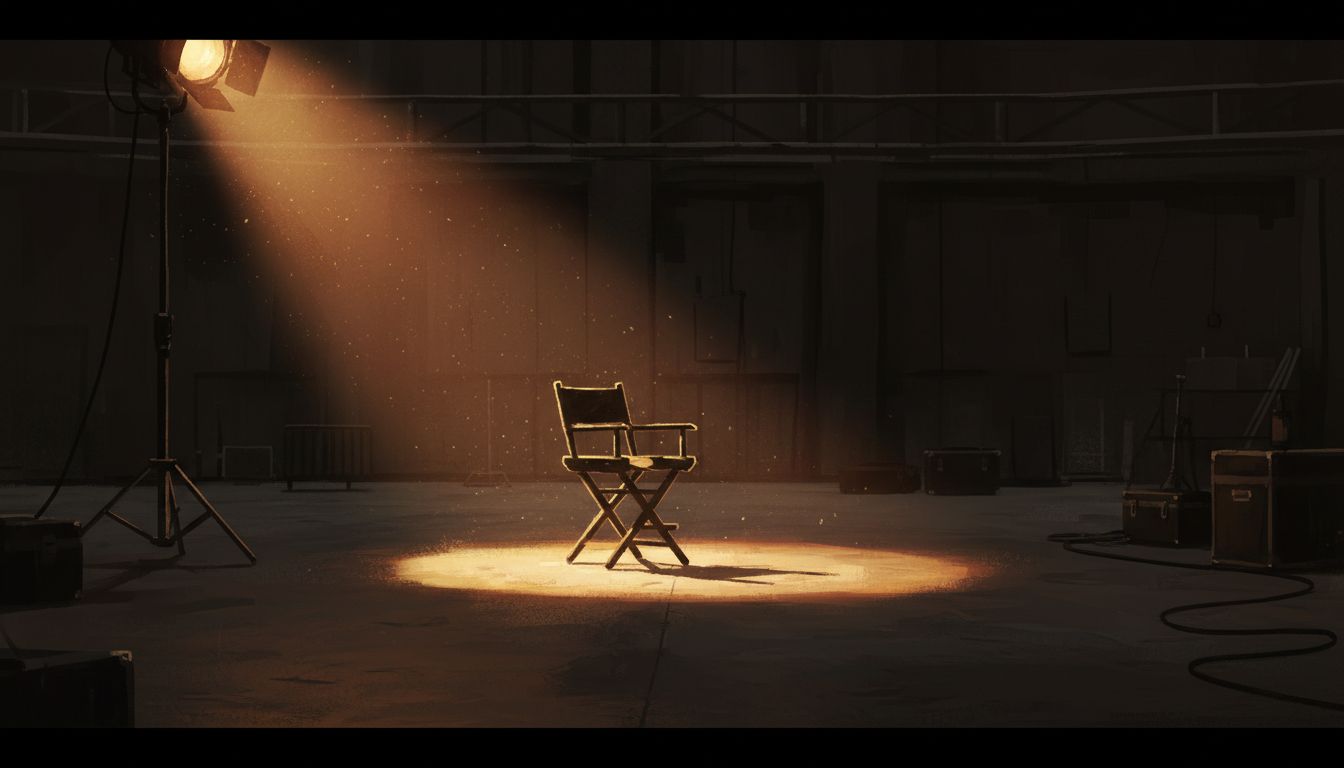
If you've spent any time scrolling generative video in the last eighteen months you've learned the tells. Doll-like eyes. Plastic skin. Teeth too even. Hands that don't quite commit. Lighting that is technically correct and emotionally dead. That list is why ninety percent of AI video still feels like demo reel filler instead of content a brand can actually ship.
AIM Director is the module our partners at AIM World.ai built to solve that problem — not by asking the model to "try harder," but by putting a director's brain on top of it. It is the cinematography layer of the AIM software suite, and it is the piece that made me want to write this post the moment I saw it working.
What AIM Director actually is
AIM Director is a cinematography-savvy prompt engineer packaged as software. You give it a rough idea — a beat, a character, a mood, a brand context — and it returns a full creative package: a one-screen creative brief, a stills prompt ready for Midjourney, a video prompt calibrated for Google Veo 3, an optional Runway shotplan, a character-consistency pipeline through Higsfield, a voice swap path through ElevenLabs, a revision menu of targeted tweaks, and a QC checklist that hunts the AI tells before you publish.
Three principles run through everything it outputs, and they are the reason the result reads as cinema instead of computed:
- Imperfections equal realism. Scars, pores, stray hairs, dust, haze, lens flaws, micro-asymmetry. Director writes these into every prompt because smooth is a synonym for fake.
- Lighting first, then the rest. Type, direction, quality, exposure ratio. A 2:1 ratio by default, 4:1 when you want punch. Light leads the shot before camera or costume.
- Lens language over adjectives. Focal length, glass character, aperture — 35mm at f/4 with vintage bloom, 85mm at f/2 for compression. "Hyper realistic" is banned; information-dense clauses replace it.
Inside a Director brief
SUBJECT · age, 2–3 imperfections, wardrobe texture
LIGHTING · natural or artificial, direction, quality, exposure ratio 2:1 or 4:1
CAMERA · angle, lens (mm), aperture, movement — handheld micro-jitter, slow arc, locked-off
ATMOSPHERE · light haze, dust motes, heat shimmer
COLOR · 60/30/10 palette — base / secondary / accent
CONSISTENCY · Higsfield character ID reused across every beat
Where Director sits inside the AIM suite
AIM is a suite, not a single tool. Three modules cover the shipping pipeline end to end. Keyframe generates stills and keyframes — the most technically advanced module of the three, and the one users tend to open first. Sequence handles shot-to-shot continuity, making sure a character's jacket, light and jaw line don't mutate between beats. Director is the cinematography layer that decides light, lens, movement, imperfections and palette before any generation happens. Each module has its own focus; together they collapse a traditional preproduction-production-post timeline into one environment with one shared credit system.
The roadmap AIM is shipping against is direct: launch on Keyframe first, fold Director's cinematic controls into that surface, then bring Sequence into the same window. A founding-members window with early pricing opens at launch; we're advising brands in our book to grab it.
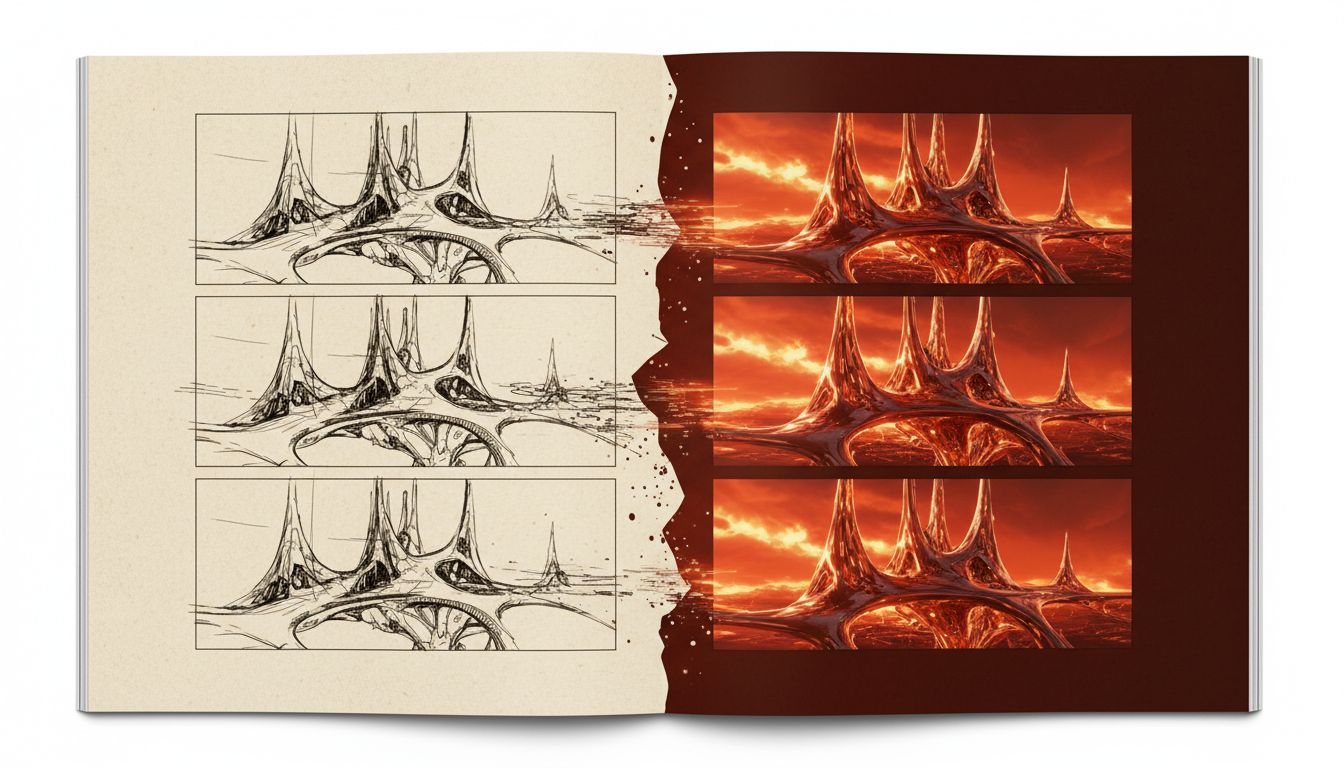
A tool finally proportional to the thinking upstream of the camera.
Who it's for
Three audiences get obvious, immediate value:
- In-house brand teams shipping weekly video. One brief, one afternoon, a campaign's worth of variants that hold the same character, the same light, the same palette across formats.
- Boutique creative shops producing brand films. The director's instincts — lens, ratio, haze, grain — become defaults. Less time fighting the model; more time shaping the story.
- Film schools and young filmmakers. AIM's go-to-market plan targets cinematography programs with a founding-student price because the muscle memory forms here: the generation that learns to direct AI is the generation that will ship the next decade of commercial work.
A concrete example from the bench
We tested a short brief for a consumer health brand: a thirty-something founder, unpolished, talking to camera in a lived-in kitchen at golden hour, 9:16, eight seconds, one line of dialogue. Without Director, a typical Veo 3 pass produced technically acceptable video with the classic tells — skin too smooth, light too even, one eye catchlight slightly off. With Director in the loop, the same brief produced: a 35mm handheld shot at f/4 with a 2:1 exposure ratio, visible pores and a flyaway hair, light haze, a muted palette of concrete gray, warm oak and a rust-orange accent, a Higsfield character ID we could reuse in seven follow-up shots, and an ElevenLabs voice swap tight enough that we didn't rebuild the line. Same eight seconds. A completely different commercial object.
Two years ago this shot was a full day with a crew, a location and a negotiation. Last week it was an afternoon between a coffee and a lunch.
Why Cipion is talking about it
Cipion Marketing is the exclusive strategic and marketing partner of AIM World.ai. We don't license the software as a reseller — we bring strategy, brand architecture, GEO and creative direction; AIM brings the production pipeline; the client gets one operation instead of two. Practically, that means an AIM Director brief usually starts on a Cipion strategy call and ends with finished cinematic content that fits inside a larger brand system — messaging, funnel, paid media, content calendar. One room, one direction, no handoffs that kill tone.
That's the thing I've been chasing for a long time: a version of the agency where the bottleneck isn't budget, it isn't location, it isn't calendar — it's the quality of the thinking upstream of the camera. AIM Director is a tool that is finally proportional to the thinking. And we get to point it wherever our clients need it pointed.
Want to see AIM Director on your brief?
A 30-minute working call. Bring a real brief — a spot, a founder film, a product hero, a campaign. We'll rough it through AIM Director and show you the difference live, no slides, no pitch.
Book the call →